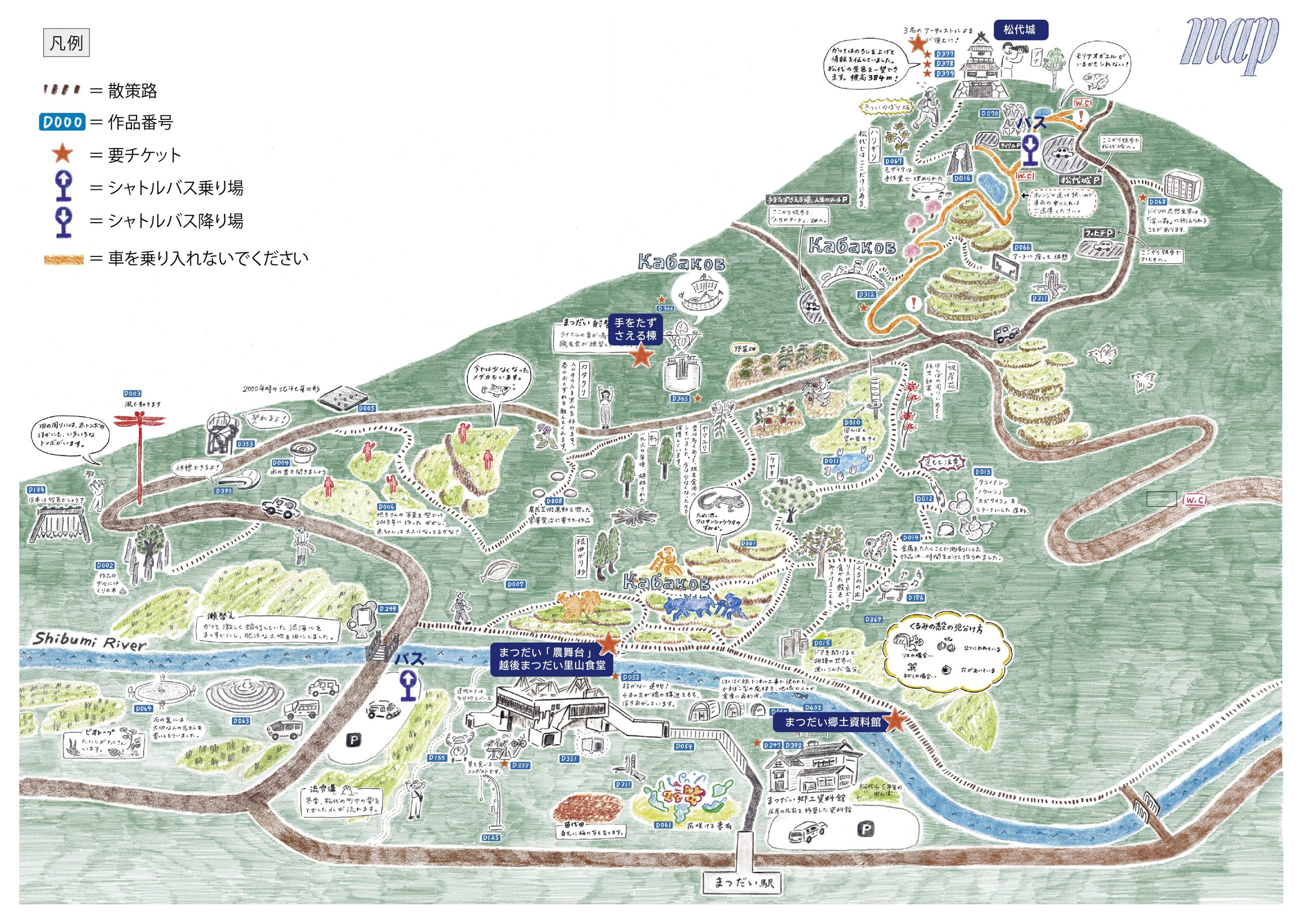
初夏のフィールドノートへようこそ。フィールドミュージアムには、作品だけでなく、植物や生きもの、農業や暮らしの知恵など、さまざまな発見が隠れています。このノートを片手に、初夏の里山を歩きながら、まつだいの魅力を探してみてください。
Welcome to the Early Summer Field Note
The Field Museum is full of discoveries—not only artworks, but also plants, wildlife, farming, and the knowledge and traditions of everyday life.Take this field note with you as you explore the satoyama landscape of Matsudai in early summer, and discover the many stories hidden within it.
POINT 1 雲海
Sea of Clouds
問い|Question
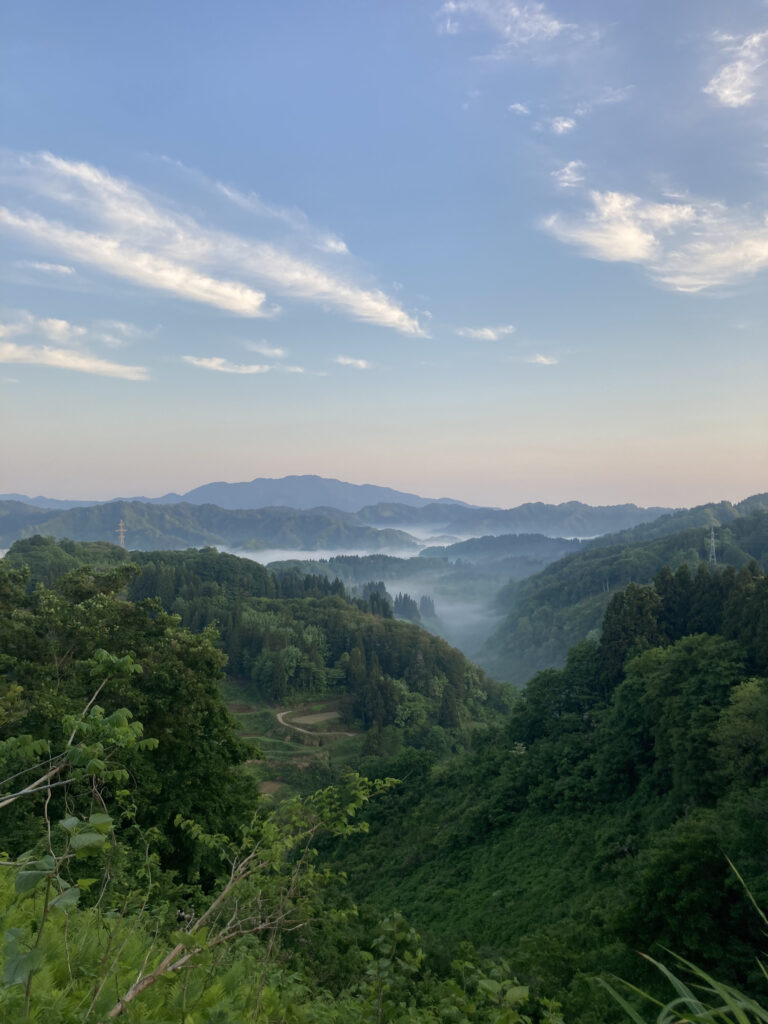
雲海は、いつ、どこで見られるでしょう?
When and where can you see a sea of clouds?
答え|Answer
早朝に、標高の高い場所で見られることがあります。
It can sometimes be seen early in the morning from higher elevations.
解説|Explanation
松代は霧の出やすい地域です。地域では霧のことを「モヤ」と呼びます。
昼と夜の気温差が大きいと、空気中の水蒸気が冷やされて霧が発生します。谷にたまった霧を高い場所から見ると、雲海のように見えます。
この寒暖差は、お米をおいしく育てることにもつながります。初夏から秋にかけて、条件がそろうと早朝5時ごろに見られることがあります。
Matsudai is an area where fog forms easily. Local people call the fog “moya.”
When there is a large difference between daytime and nighttime temperatures, moisture in the air cools and turns into fog. When the fog gathers in the valleys and is viewed from higher ground, it looks like a sea of clouds.
These same temperature differences also help grow delicious rice. From early summer to autumn, the sea of clouds can sometimes be seen around 5 a.m. under the right conditions.
POINT 2 ゼンマイ
Royal Fern
問い|Question
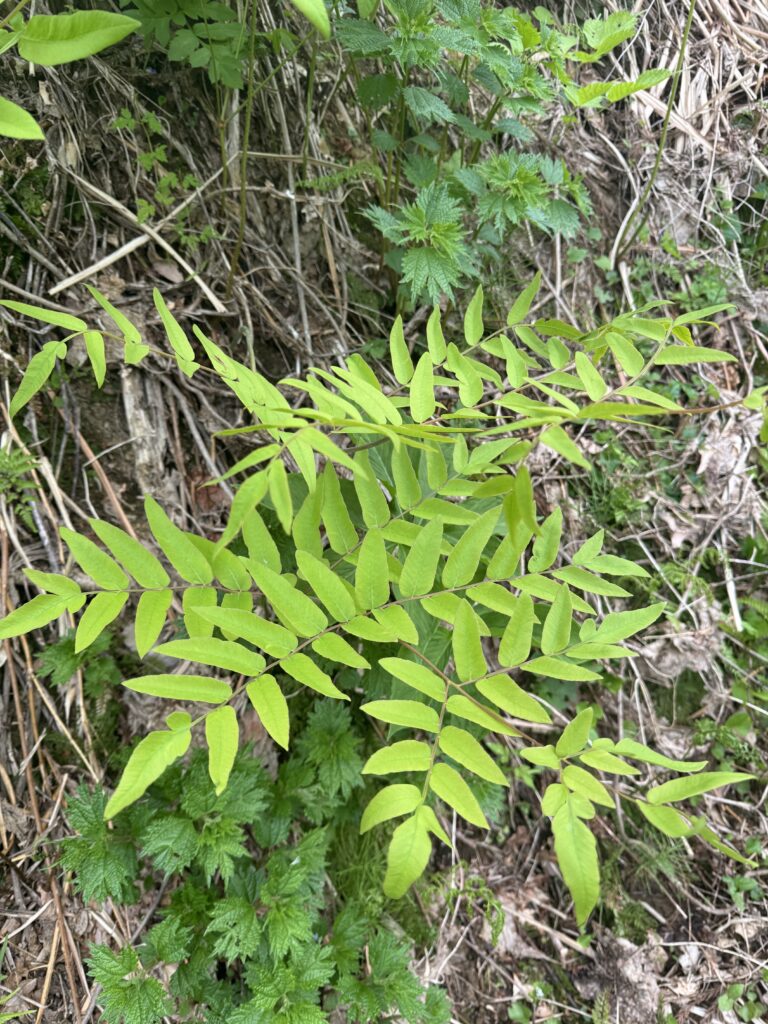
この植物は、昔の子どもたちの遊び道具でもありました。
どんな遊び方をしたのでしょう?
This plant was once used by children as a toy.
How did they play with it?
答え|Answer
葉を半分に切り、紙飛行機のように飛ばして遊びました。
They cut the leaves in half and threw them like paper airplanes.
解説|Explanation
この植物はゼンマイです。春先の渦巻いた若芽は山菜として親しまれますが、葉が開いたあとは食べるには向きません。
その代わり、開いた葉は遊び道具にもなりました。葉を半分に切ると、紙飛行機のように飛ばすことができます。
ゼンマイは、タラの芽やウドと並ぶ人気の山菜です。日当たりの良い急斜面に生えることが多く、採るのも加工するのも手間のかかる、里山の恵みです。
This plant is called zenmai (royal fern). Its curled young shoots are commonly eaten as a wild mountain vegetable in spring, but once the leaves open, they are no longer suitable for eating.
Instead, the leaves became toys. When cut in half, they can fly like a paper aircraft.
Zenmai is considered one of the most prized wild vegetables in this region, alongside tara shoots and udo. It often grows on steep sunny slopes, and harvesting and processing it requires a great deal of work.
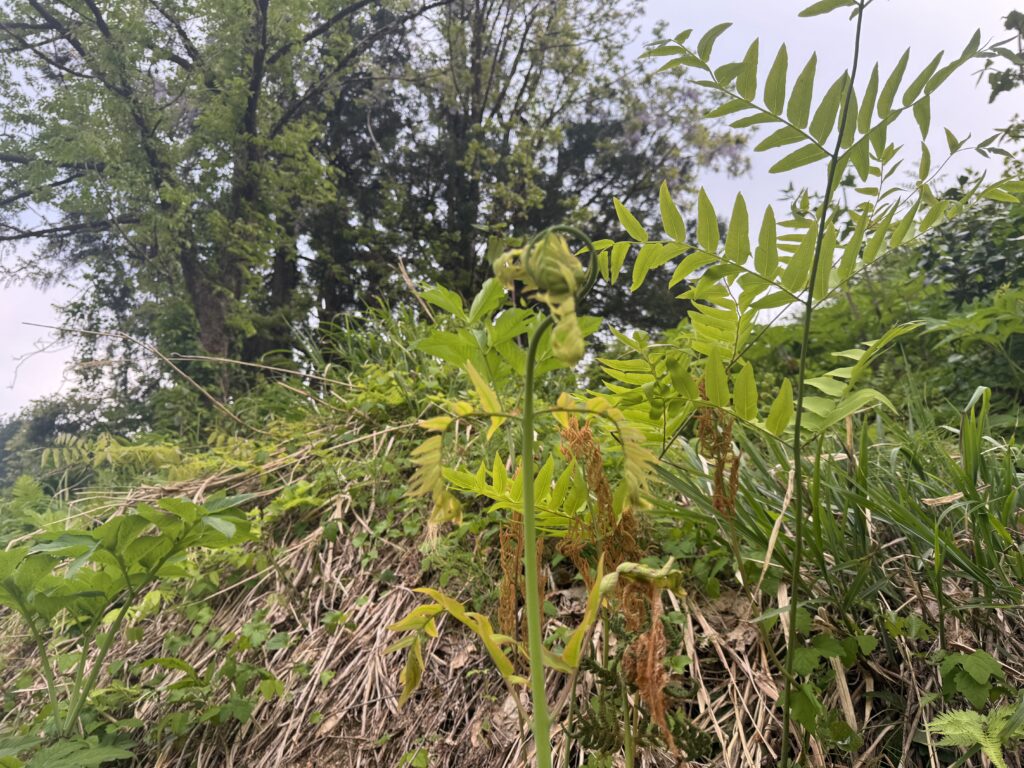
POINT 3 シシウド(サイキ)
Japanese Angelica Tree
問い|Question
この植物は、昔の子どもたちの遊び道具でもありました。
どんな遊び方をしたのでしょう?
This plant was once used by children as a toy.
How did they play with it?
答え|Answer
太い茎の中は空洞になっています。
その茎を使って、水鉄砲のように遊びました。
Its thick stem is hollow inside.
Children used it like a water gun.
解説|Explanation
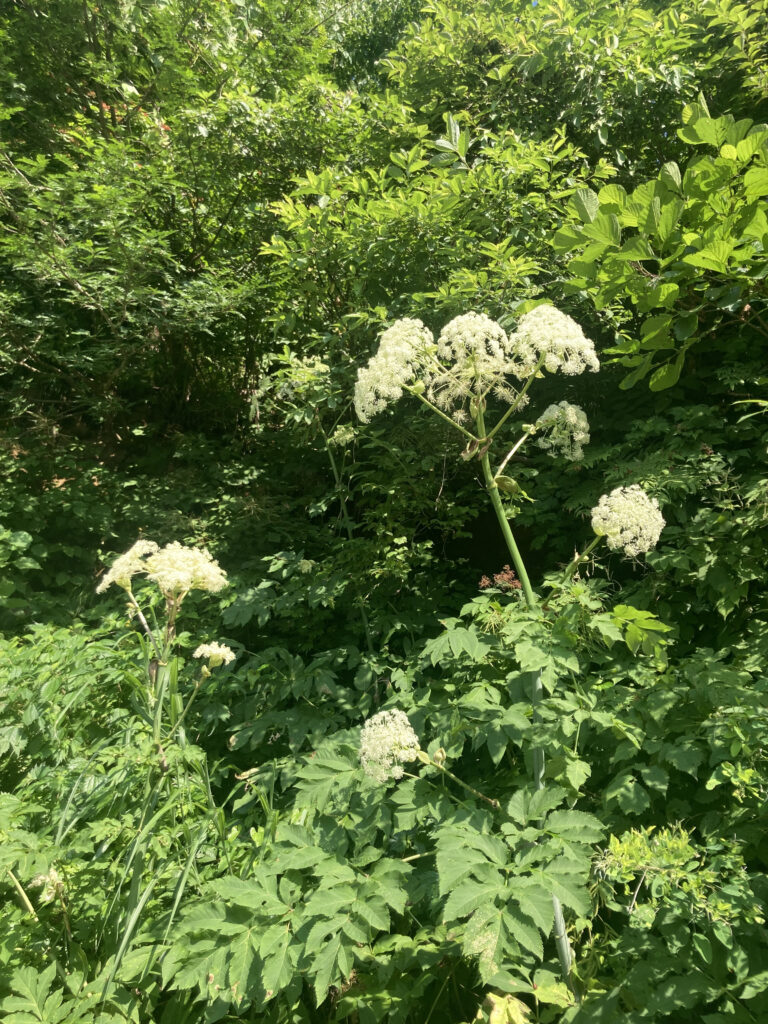
この植物はシシウドです。地域では「サイキ」とも呼ばれます。
春先には山菜のウドと間違えられることもありますが、夏になると大きく育ち、違いがよくわかります。放射状に広がる白い花も特徴です。
昔の子どもたちは、中が空洞になった茎に水を入れ、水鉄砲のようにして遊びました。身近な植物をおもちゃに変えるのも、暮らしの知恵のひとつでした。
This plant is called shishiudo, and locally it is also known as “saiki.”
In spring, it is sometimes mistaken for edible udo shoots, but by summer it grows much larger and becomes easy to identify. Its white flowers spread out in large umbrella-like clusters.
Children once filled its hollow stems with water and used them like water guns. Turning familiar plants into toys was one of the simple skills of everyday life.
POINT 4 稲
Rice
問い|Question
田植えが終わり、稲はぐんぐん成長しています。
順調に育っているかどうかは、どこを見ればわかるでしょう?
The rice plants are growing quickly after planting.
What should you look at to know whether they are growing well?
答え|Answer
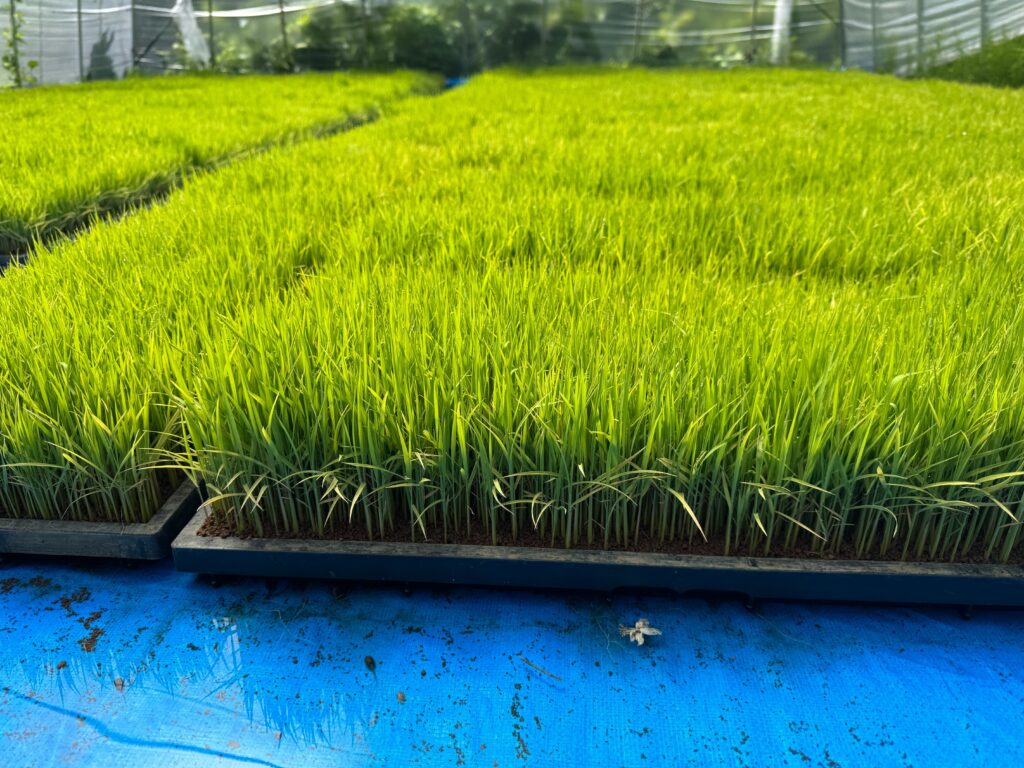
茎の本数と、葉の色を見ます。
You look at the number of stems and the color of the leaves.
解説|Explanation
田植えのときは3〜4本ほどだった苗も、この時期にはしっかり根づき、新しい茎を増やしていきます。この茎の増え方を「分けつ(ぶんけつ)」といいます。
茎が数が増えていて、葉の色が濃い緑で、まっすぐ元気に伸びていることも、順調に育っている目安です。
At the time of planting, each rice seedling has only three or four stems. By this season, the roots have settled firmly into the soil and new stems begin to grow. This process is called “tillering.”
Healthy rice plants have many stems, deep green leaves that stand upright and grow strongly.
POINT 5 朴の木(ホオノキ)
Japanese Bigleaf Magnolia
問い|Question
田植えが終わるこの時期には、「田休み」という習慣があります。
田休みの日に、この木の葉は使われました。
何に使われたのでしょう?
After rice planting, there is a traditional custom called “Ta-yasumi” (a rest day after planting rice).
On that day, the leaves of this tree were used.
What were they used for?
答え|Answer
葉でごはんを包み、「朴の葉ごはん」として食べました。
People wrapped rice in the leaves and ate it as “Hō-no-ha gohan.”
解説|Explanation
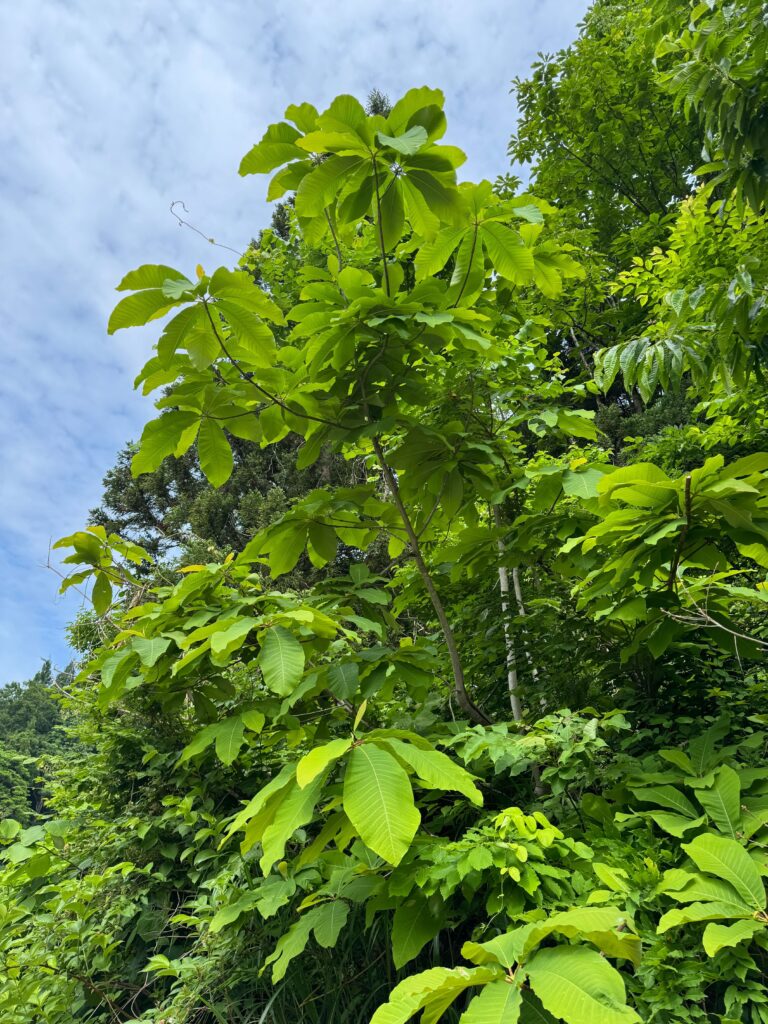
朴の葉にはよい香りがあり、殺菌作用もあるとされています。蒸し暑い時期に、ごはんをおいしくいただくための知恵でした。
きな粉と砂糖で味付けし、豊作を願って食べたと伝えられています。
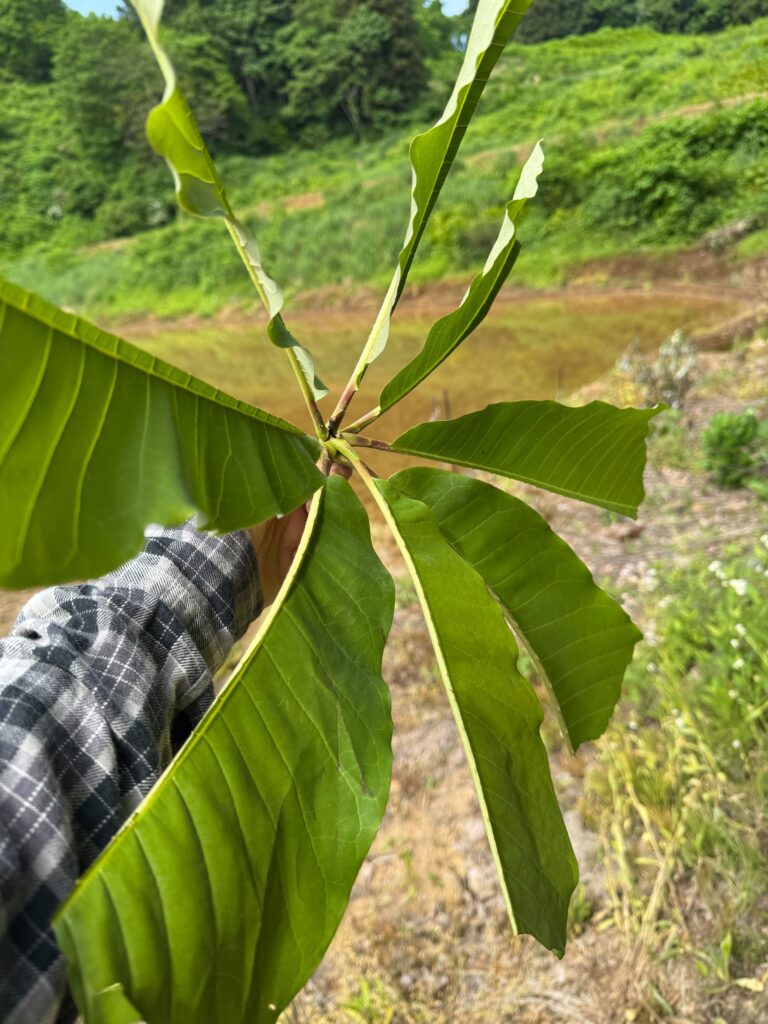
また、葉の付き方を活かして、大きなかざぐるまを作って遊ぶこともできます。
Magnolia leaves have a pleasant fragrance and are also said to have antibacterial properties. Wrapping rice in the leaves was a practical way to keep food fresh and flavorful during the humid season.
Traditionally, the rice was flavored with roasted soybean flour and sugar, and eaten while wishing for a good harvest.
The large leaves could also be used to make pinwheel-like toys for children.
POINT 6 カエル
Frogs
問い|Question
元気に鳴いているカエル。
どうして、まつだいにはたくさんいるのでしょう?
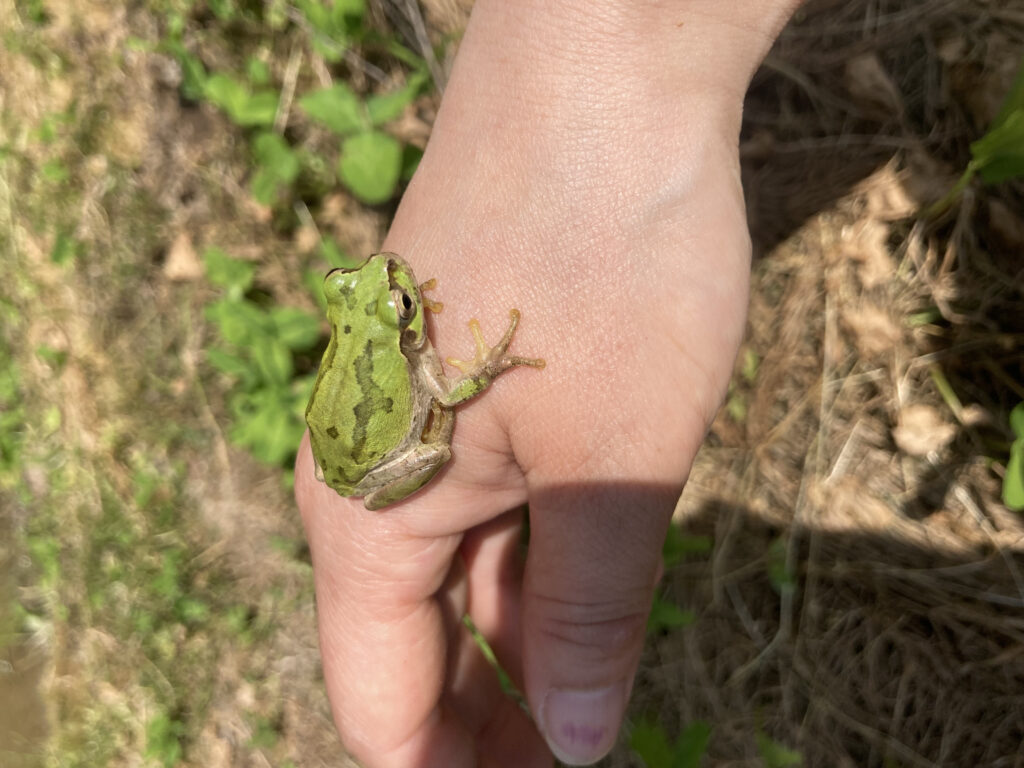
Why are there so many frogs in Matsudai?
答え|Answer
カエルが暮らすために必要な、水辺と森があるからです。
Because Matsudai has both wetlands and forests, which frogs need to survive.
解説|Explanation
カエルは、水辺と陸の両方を必要とする生きものです。田んぼや池で卵を産み、まわりの草地や森で暮らします。
種類によって、森で過ごす時間が長いものや、水辺の近くで暮らすものなど、さまざまなカエルがいます。
トンボなども同じように、水と陸の両方がそろった環境を必要としています。田んぼや森は、多くの生きもののすみかになっています。
Frogs need both water and land to live. They lay eggs in rice fields and ponds, then spend much of their lives in nearby grasslands and forests.
Different species live in different ways: some spend more time in forests, while others stay close to water.
Dragonflies and many other creatures also depend on environments that include both water and land. Rice fields and forests provide habitats for many living things.
POINT 7 川
River
問い|Question
川の水の量は、季節によって大きく変わります。
春と夏では、どちらの方が水が多いでしょう?
The amount of water in the river changes greatly with the seasons.
Which season has more water, spring or summer?
答え|Answer
春の方が水が多くなります。
The river usually has more water in spring.
解説|Explanation
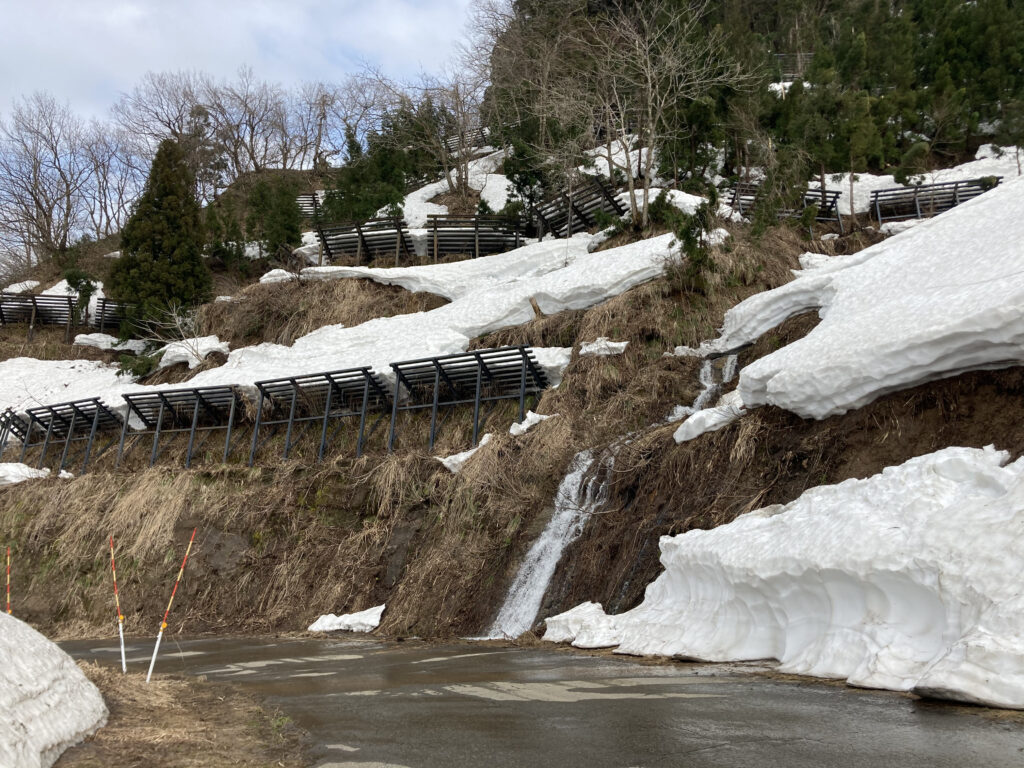
春には、山に積もった雪が一斉にとけ、たくさんの雪どけ水が川に流れ込みます。3月下旬ごろには、濁った水が大きな音を立てて流れることもあります。
初夏になると流れは落ち着きますが、夕立や大雨の後には、一時的に水量が増えることがあります。
In spring, the snow covering the mountains melts all at once, sending large amounts of water into the rivers. Around late March, the rivers can become powerful torrents carrying muddy water.
By early summer, the flow becomes calmer, although heavy rainstorms can still temporarily increase the water level.
POINT 8 イリヤ&エミリア・カバコフ「棚田」
Ilya & Emilia Kabakov “Rice Fields”
問い|Question
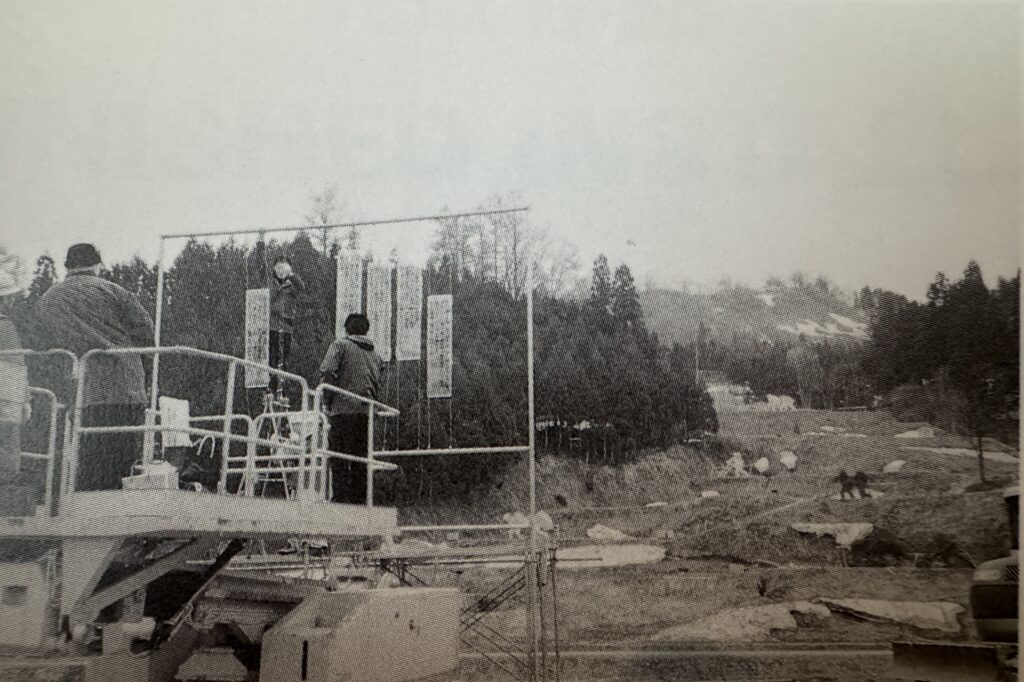
この作品は、どうしてここに設置されたのでしょうか?
Why was this artwork installed here?
答え|Answer
ここに棚田があったからです。
Because terraced rice fields once existed here.
解説|Explanation
イリヤ・カバコフは、1999年にまつだいを訪れ、棚田の風景や、自然とともに暮らす人々の営みに強く心を動かされました。
そして、この場所そのものを作品の一部として取り込む構想を考えました。
当初は、アートに親しみのなかった地域の人々に意図が伝わりにくいこともありましたが、作品が棚田とそこに暮らす人々への敬意を表していることが理解され、設置が実現しました。
When Ilya Kabakov visited Matsudai in 1999, he was deeply moved by the terraced landscape and by the lives of people living together with nature.
He conceived the idea of creating a work that would incorporate the land itself as part of the artwork.
At first, the intention of the project was not easy for local residents unfamiliar with contemporary art to understand. However, people gradually recognized that the work expressed respect for the terraced fields and for the lives connected to them, and the installation became possible.
問いの答えは見つかりましたか?
里山の風景の中には、作品だけでなく、植物や生きもの、農業や暮らしの知恵など、まだたくさんの発見が隠れています。
季節が変われば見えるものも変わります。
また別の季節にも、フィールドミュージアムを歩いてみてください。
Did you find the answers to the questions?
The satoyama landscape holds many discoveries—not only artworks, but also plants, wildlife, farming, and the wisdom of everyday life.
As the seasons change, so do the things we notice.
We hope you will return to the Field Museum and explore it again in another season.